

Promoting Green Solutions for a Sustainable Future
PCB Connect Group & EcoVadis
Introduction
The printed circuit board (PCB) industry is at the heart of technological advancement, enabling innovations in consumer electronics, automotive applications, healthcare, and industrial automation. However, with great technological progress comes a significant environmental responsibility. PCB manufacturing involves resource-intensive processes, high energy consumption, and hazardous waste generation. To address these challenges, industry leaders like PCB Connect Group who are guided by sustainability assessment platforms such as EcoVadis. By embracing green technologies, responsible material sourcing, and energy-efficient production methods, the PCB industry is striving toward a more sustainable future.
The Environmental Challenges of PCB Manufacturing
The traditional PCB manufacturing process presents several ecological concerns, including:
- High Energy Consumption: PCB fabrication involves intensive heating, etching, and plating, all of which require significant energy.
- Chemical Usage and Waste: The production process utilizes hazardous chemicals such as acids and solvents, leading to toxic waste that must be managed properly.
- Water Waste and Pollution: Large quantities of water are used for rinsing and processing, often resulting in contamination if not treated correctly.
- E-Waste Contribution: PCBs are integral to electronic devices, and the increasing demand for electronics leads to rising e-waste volumes.
To mitigate these issues, companies must implement sustainable manufacturing practices and adopt environmentally friendly materials that minimise their impact on the planet.
PCB Connect Group’s Commitment to Sustainability
PCB Connect Group is a leading provider of PCBs committed to reducing the industry's environmental impact. The company has taken several measures to promote sustainability, including:
- Sustainable Supply Chain Management: Partnering with manufacturers who adhere to stringent environmental regulations and ethical labour practices.
- Waste Reduction Initiatives: Implementing circular economy principles to reduce production waste and optimise material usage.
- Eco-Friendly Materials: Encouraging the use of lead-free solder, halogen-free laminates, and recyclable PCB components.
- Energy Efficiency Programs: Investing in energy-saving manufacturing techniques and promoting renewable energy adoption in production facilities.
By continuously monitoring and improving its environmental performance, PCB Connect Group plays a pivotal role in setting sustainability benchmarks for the industry.
The Role of EcoVadis in Environmental Stewardship
EcoVadis is a globally recognised sustainability assessment platform that evaluates companies based on their environmental, social, and ethical practices. Through its rigorous evaluation framework, EcoVadis assesses:
- Environmental Impact: Examining carbon emissions, waste management, and sustainable resource use.
- Labor & Human Rights Practices: Ensuring fair labour conditions, workplace safety, and employee well-being.
- Ethical Business Conduct: Monitoring anti-corruption policies and responsible governance practices.
- Sustainable Procurement: Encouraging responsible sourcing and ethical supplier engagements.
By participating in EcoVadis assessments, PCB Connect Group gains valuable insights into its sustainability performance and identifies key areas for improvement. This commitment to transparency and continuous enhancement strengthens its credibility and fosters trust among clients and stakeholders.
Sustainable Manufacturing Processes for a Greener Future
To create a truly sustainable PCB industry, companies must adopt environmentally friendly manufacturing practices. Some key green solutions include:
1. Use of Renewable Energy Sources
Manufacturers are increasingly transitioning to renewable energy sources such as solar and wind power to reduce their carbon footprint. Many PCB production facilities are integrating solar panels to power their operations, significantly cutting down on fossil fuel dependency.
2. Water Recycling and Wastewater Treatment
Water-intensive processes in PCB fabrication require innovative solutions to minimize waste. Many companies are implementing water recycling systems and advanced wastewater treatment methods to reduce water consumption and prevent pollution.
3. Adoption of Eco-Friendly Materials
Sustainable materials play a crucial role in reducing the environmental impact of PCB manufacturing. Some of the key eco-friendly alternatives include:
- Halogen-Free Laminates: These materials eliminate harmful substances that contribute to air and soil pollution.
- Lead-Free Soldering: Reducing the use of lead in soldering minimizes hazardous waste and improves worker safety.
- Recyclable Substrates: Using biodegradable or recyclable PCB substrates helps decrease electronic waste.
4. Advanced Manufacturing Techniques to Reduce Waste
Lean manufacturing principles and automation help optimise material usage and minimise waste. Innovations such as 3D printing and additive manufacturing enable precise material application, reducing scrap and excess consumption.
5. Circular Economy and PCB Recycling Programs
A circular economy approach ensures that electronic waste is managed responsibly. By designing PCBs with recyclability in mind and establishing take-back programs, manufacturers can extend the lifecycle of electronic components and promote material recovery.
Future Innovations in Green PCB Manufacturing
As the PCB industry moves toward sustainability, emerging technologies and innovations are shaping the future of green manufacturing. Some promising developments include:
- Biodegradable PCBs: Research is underway to develop organic-based circuit boards that naturally decompose, reducing e-waste. Researchers have developed PCBs using banana fibre, wheat gluten, and other plant-based materials.
- Graphene and Nanotechnology: These materials offer high electrical conductivity and durability while being more environmentally friendly than traditional copper-based PCBs.
- Artificial Intelligence (AI) for Energy Optimisation: AI-driven systems are being used to analyse energy consumption patterns and optimize manufacturing efficiency.
The Business Benefits of Sustainable PCB Manufacturing
Embracing sustainability in PCB manufacturing is not only beneficial for the environment but also offers significant business advantages, including:
- Regulatory Compliance: Meeting stringent environmental regulations ensures smoother market entry and avoids legal penalties.
- Cost Savings: Energy-efficient processes and waste reduction initiatives lead to lower operational costs.
- Enhanced Brand Reputation: Companies committed to sustainability build stronger relationships with environmentally conscious customers and partners.
- Competitive Advantage: As demand for green electronics grows, sustainability-focused companies gain a market edge over competitors.
Conclusion
The PCB industry is at a critical juncture where sustainable manufacturing and responsible material sourcing are paramount to reducing its environmental impact. Companies like PCB Connect Group are leading the way by implementing eco-friendly practices, adopting innovative green technologies, and leveraging sustainability platforms such as EcoVadis. By prioritising renewable energy, waste reduction, and ethical sourcing, the industry can transition toward a more sustainable and environmentally responsible future.
As global demand for electronics continues to rise, it is imperative for PCB manufacturers to integrate sustainability into their core business strategies. Through collaborative efforts, technological advancements, and regulatory support, the industry can achieve long-term environmental sustainability while continuing to drive technological progress.
For more information, please visit www.pcbconnectgroup.com

Building Stronger Connections:
Key Strategies for Reliability and Performance
In the realm of electronics, every connection plays a crucial role. Whether dealing with simple consumer devices or intricate industrial systems, the strength of Printed Circuit Board (PCB) connections is vital for ensuring performance, reliability, and longevity. At PCB Connect Group, we recognise that robust connections are fundamental to driving innovation and achieving success. While our PCB manufacturing establishes the foundation for electronic systems, its seamless integration with PCB Assembly (PCBA) is what transforms a design into a fully functional, durable, and high-quality end product. This article explores how an optimised PCB manufacturing process enhances PCBA, resulting in superior performance across a range of applications.
Our expertise extends beyond the fabrication of high-quality PCBs. As technology advances, so do the challenges in the manufacturing and assembly of these crucial components, which require advanced materials, precise design, and stringent quality control. An optimised PCB manufacturing process is not only about meeting industry standards; it’s about pushing boundaries and exploring what’s possible. Innovations in material selection, design optimisation, and automated production techniques ensure that each step enhances the performance and reliability of the final product. By fostering close collaboration between our fabrication and assembly teams, we ensure that every connection is engineered for maximum efficiency and durability.
Material Matters: Choosing the Reliable Connections
Building strong connections starts with selecting high-quality materials. Conductive traces, typically made of copper, must have the appropriate thickness to efficiently manage current loads. Similarly, the choice of substrate material—whether it’s FR4, Rogers, or Polyamide—plays a significant role in enhancing durability and thermal efficiency. Investing in premium materials minimises the risk of failures and boosts the overall resilience of PCB designs.
Using the right material directly impacts the durability and efficiency of PCBA. Factors to consider include:
- FR4 vs. Metal Core PCBs: Choosing the best substrate based on thermal and mechanical requirements.
- Surface Finishes (ENIG, HASL, OSP): Affecting solderability and component longevity.
- Multi-Layer Stack-ups: Allowing for compact designs while maintaining signal integrity.
Optimising Design for Connectivity
The layout of a PCB is critical for ensuring connection strength. Properly sized traces prevent overheating and signal degradation, while strategically placed vias—be they through-hole, blind, or buried—enhance connectivity and minimise resistance. A well-positioned ground plane reduces noise and enhances signal integrity, and optimising solder pad sizes ensures reliable soldering and helps prevent cold joints
Key design considerations include:
- Trace Width & Spacing: Proper dimensions to avoid overheating and signal degradation.
- Via Types & Placement: Utilising through-hole, blind, or buried vias enhances connectivity while minimising resistance.
- Ground and Power Planes: A well-placed ground plane reduces noise and improves signal integrity.
- Solder Pad Sizing: Optimised pad sizes ensure reliable soldering and prevent cold joints.
Advanced Manufacturing Techniques for Superior Assembly
State-of-the-art manufacturing processes significantly enhance PCB compatibility with PCBA. For example, High-Density Interconnect (HDI) technology allows for the integration of miniaturised, high-performance components, while flexible and rigid-flex PCBs provide the design versatility needed for complex applications. Advanced inspection methods—such as Automated Visual Inspection (AVI) and X-ray inspection—ensure that each board is free from defects before entering the assembly stage.
Precision Manufacturing for Optimal Assembly
Creating a high-quality PCB is essential for a smooth assembly process and the overall success of the PCBA. Achieving this quality begins with precision manufacturing. Accurate drilling and routing ensure that holes and vias are correctly positioned for optimal component alignment. Additionally, the right copper thickness combined with a superior surface finish enhances conductivity and solderability, ensuring that components adhere securely. Maintaining tight tolerances across the board guarantees consistent dimensions, preventing misalignment during assembly and contributing to a robust final product.
Seamless Transition from PCB Fabrication to Assembly
Effective collaboration between PCB manufacturers and assembly partners is crucial for success. Integrating Design for Manufacturability (DFM) and Design for Assembly (DFA) processes reduces errors and increases efficiency, streamlining supply chain coordination, minimising lead times, and ensuring component compatibility. Rigorous quality control measures also help eliminate defects early in the process, further contributing to a robust final product.
Implementing Robust Testing and Quality Control
Testing is essential to ensure that PCB connections meet performance expectations. In-Circuit Testing (ICT) verifies electrical continuity and component placement, while functional testing simulates real-world conditions to validate overall performance. Additionally, thermal and vibration testing assess the durability of the board in demanding environments, and X-ray inspection is used to detect hidden solder defects, particularly in Ball Grid Array (BGA) components.
Environmental Protection & Conformal Coating
For PCBs exposed to harsh environments, protective coatings can enhance longevity. Conformal coatings such as acrylic, silicone, or polyurethane shield against moisture, dust, and chemical exposure, preventing corrosion and electrical failures. Selecting a solder mask with a high surface tension (typically >38 mN/m or Dyne/cm) avoids contraction of the conformal coating.
Advanced Interconnection Technologies
Emerging interconnection technologies are greatly enhancing PCB performance and reliability. Flexible and rigid-flex PCBs improve mechanical durability and optimise space efficiency, making them ideal for compact designs. High-Density Interconnect (HDI) PCBs support fine-pitch components, allowing for even more compact and efficient layouts.
Conclusion
A high-quality PCB is the foundation of a successful PCBA process. By focusing on precision manufacturing, material selection, and advanced fabrication techniques, PCB manufacturing enhances assembly efficiency and ensures reliable electronic products.
At PCB Connect Group, we strive to deliver PCBs optimised for seamless assembly, empowering our customers with superior electronics solutions.
For expert PCB solutions and consultation, contact PCB Connect Group.

Chinese New Year 2025: Have you prepared your PCB orders?
Chinese New Year 2025 is fast approaching, and will fall on Wednesday, January 29th 2025, starting the year of the Dragon. As a public holiday, our China factories will be closed for seven days from January 28th to February 3rd 2025.
The holiday could affect the production of your printed circuit boards. We kindly advise you to consider that from January 21st – February 11th, our Chinese factories will reduce production, so planning ahead is essential.
To avoid supply chain disruption, please place your orders as early as possible, covering the production volumes for the coming months.
Secure your PCB production now. Together, we can plan the best solution for your needs! Our team is well-prepared to help you put your requests into action and answer any questions. Do not hesitate to contact your local PCB Connect office for further information about lead times and recommendations for your order planning. Get in touch today.


PCB Connect Group Celebrates 20 Years in Business
Stockholm, Sweden – Two decades ago, Jonas Pettersson embarked on an entrepreneurial journey that would transform a nascent idea into a global enterprise. Today, PCB Connect celebrates its 20th anniversary, marking a significant milestone in its history of innovation, growth, and success. Founded in 2004, PCB Connect started with a clear vision: to create a company that not only stood out in the marketplace but also made a positive impact on its employees, customers, and the wider community. What began as a modest operation has since blossomed into a thriving business with a turnover of 53 million USD and a dedicated workforce of 125 employees spread across 17 countries. The CEO, Jonas Pettersson and some employees would like to share their journey with PCB Connect Group over the years...
The Netherlands Division
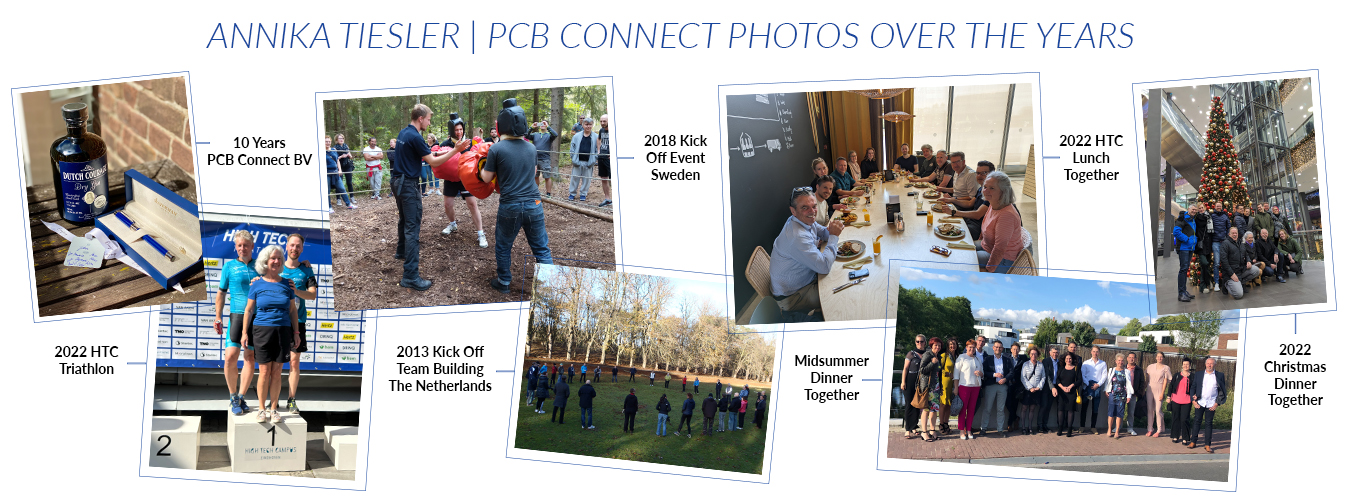
"Celebrating 20 years in business is a remarkable achievement," said John Kuitert, Managing Director of PCB Connect BV in the Netherlands office, who has seen the company grow significantly since joining in August 2010. Annika, a member of his team, would like to share her experience with the company.
Annika Tiesler, Account Manager, joined in June 2014 in the PCB Connect BV, Netherlands office.
After Annika moved from Berlin to Eindhoven in 2011 and after working for other companies that were not the right fit, she soon found that PCB Connect was the opportunity she was looking for and has been with the company ever since.
Tell us about your early days joining PCB Connect, Annika:
"I remember growing much faster because of all the business activities such as fairs, customer visits, networking, and daily workflow reviews, which helped me adapt independently and quickly to the role. Starting in CS and Logistics, I could work to my strengths and be myself. I've continued to build strong relationships with customers, giving the best service and working in a great team - I couldn't ask for more. Now, being an Account Manager, I've been able to define the role; being more diverse, I can make it my own and work to my strengths."
Annika, what makes PCB Connect a great place to work?
"My CS team makes my work enjoyable. We get on well in our day job, as well as outside of work. I have been able to balance my personal and work life. I have felt supported having grown my family since being with PCB Connect. Any challenge that has come my way, I have been able to manage and have stayed committed to the business without sacrificing my personal time."
How has PCB Connect grown over the years, Annika?
"The company growth over the years has been tremendous and persists to this day. Everyone's hard work and dedication to learning new platforms and focusing on what is important have contributed to the business's global expansion. For me, it is truly the people who are the face and the heart of PCB Connect. We value working together and providing a solution for our customers' PCB challenges. Regardless of the situation, we make things work. I am also happy in the Netherlands, and PCB Connect helped me to stay in Eindhoven with my family."
China Division
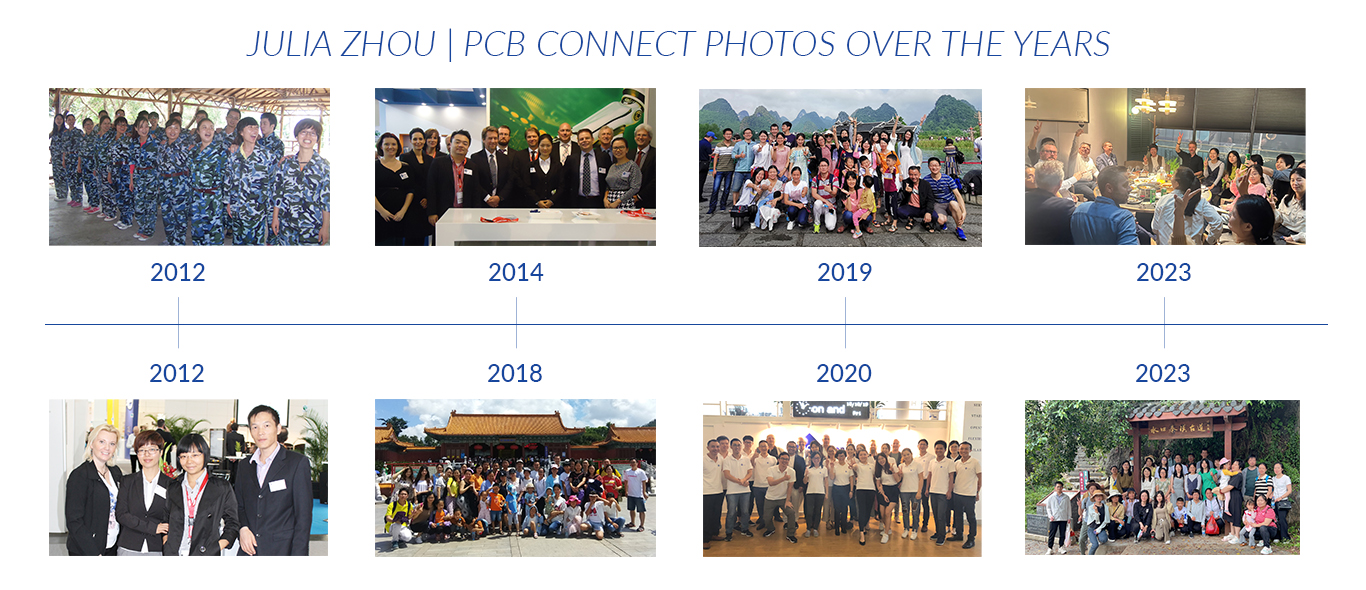
Julia Zhou, Managing Director of PCB Connect Electronics (Shenzhen) Co., Ltd in the China office, started with the company back in 2005. She began working in the Logistics department, then Sourcing and in 2012 got promoted to Chief Representative and transitioned into the Managing Director role when company status was established.
"The China division remains the most important bridge between suppliers, intercompany and customers. And China is a big potential market. The sales team and I have achieved certain results, and are committed to expanding a higher market share as we continue to work together and develop the company into a strong position to acquire new partnerships. The world is everchanging, and the PCB industry now is different compared to 20 years ago. We are constantly motivate ourselves to adjust to the changes and keep improving. In the future, it will be a situation with both challenges and opportunities, as long as we believe in the idea that the pursuit of excellence is endless, our team and our company will become more successful," said Julia Zhou. She continues, "Our 20th anniversary is a testament to our collective team. Here are a couple of heartfelt testimonials from our dedicated employees."
Fancy He, Logistics Supervisor, joined in April 2011 in the PCB Connect Electronics (Shenzhen) Co., Ltd in the China office.
Fancy's long-standing employment with PCB Connect started over 13 years ago. She liked the working environment which has made it open and simple to voice her ideas and build an effective team with support from the flexible management team.
What have you learnt since working for PCB Connect, Fancy?
"I've had the opportunity to develop my skills and knowledge from basic CAM to solving complex technical issues promptly. Over the years I have been able to get the training required to do my job effectively. Having developed my communication skills and built my confidence in understanding all the processes, procedures and negotiation abilities; I have been able to provide training to my team. There is a yearly training program which ensures everyone is up to date and can perform to their highest potential."
Fancy, tell us about the milestones or projects at work you are proud of:
"I developed and introduced the 2-4 cheap and good service logistics agent and forwarder launched in 2018. I have independently led the CN Logistics Department and been able to help my team become more qualified, and this has ensured we are capable of providing the best service to our customers and partners. The pandemic caused some delivery issues, but we carried on to find solutions, and together we overcame the obstacles."
2024 marks PCB Connect celebrating 20 years in business, what are your thoughts about it, Fancy?
"I am proud to have worked at PCB Connect for all these years and seen the company grow significantly. We have overcome difficulties, and are aware there will be more challenges in the future but with our continued commitment we will work through them. Congratulations to the business on celebrating 20 years!"
Koen Hu, Asia QA Manager, joined in April 2011 in the PCB Connect Electronics (Shenzhen) Co., Ltd in the China office.
Koen's been with PCB Connect for over 13 years in the China office and enjoys working with his team and problem-solving to provide the best outcome for customers.
What's your favourite perk, policy and/or process at PCB Connect, Koen?
"I like having performance meetings with my team, having a review to see the strengths and weaknesses in our processes allows us to address what's working well and areas that need improvements. I also appreciate our five-day working week, as this helps us balance our personal and work lives. Also, the company kick-off events have been a fantastic opportunity to meet other divisions in a new location and finally meet work colleagues in person for the first time."
Koen, what are your colleagues like and what have you learned together at PCB Connect?
"My colleagues are polite, friendly and smart. We have mutual respect for one another and work well together. Some team members and I have learnt to speak English, allowing international communication within the company and also with customers/partners. We have had training in plant auditing and improved our claim-handling method. The growth opportunities that the company offers have been excellent from international culture and personal development, strengthening each division's communication and processes."
Anything else to add, Koen?
"Yes, joining PCB Connect was the best decision of my career. Over the years, I’ve witnessed our team’s resilience, creativity, and unwavering commitment. Especially when we all were hit with the pandemic. Every day, I wake up excited to assist our customers. Our teamwork has made this journey incredibly fulfilling. Congratulations everyone to 20 years in business; here’s to 20 more years of making a difference!”
"Thank you, Fancy and Koen," said Julia Zhou. She continues "This year is the 20th anniversary of PCB Connect Group, it is special for all of us! I would like to take the opportunity to wish the company a bright future and wish our team greater unity and a more prosperous career. Thank you to every colleague for their dedication and efforts. Let's work together to create a better future!"
PCB Connect
It's been a remarkable journey. The journey of PCB Connect is a testament to the hard work of a committed team. From its humble beginnings, the company has grown exponentially, navigating through economic fluctuations and industry challenges with resilience and ingenuity.
What are your thoughts on 20 years in business, Jonas Pettersson, Founder and CEO of PCB Connect?
"Our success over the past 20 years is a result of our relentless pursuit of excellence and our commitment to innovation. We have always prioritized our customers' needs and strived to exceed their expectations. This milestone is a celebration of our team’s dedication and the strong relationships we’ve built with our clients and partners.”
Innovative Growth and Expansion
The global footprint of PCB Connect is a reflection of its ambitious growth strategy. With operations in 17 countries, the company has successfully navigated the complexities of international markets, adapting to local cultures and regulations while maintaining a unified corporate vision.
A Dedication to People
At the heart of PCB Connect’s success is its people. The company prides itself on fostering a supportive and inclusive workplace where employees are encouraged to grow and innovate. “Our team is the backbone of our company,” Jonas Pettersson emphasized. “Their passion, creativity, and unwavering commitment are what drive us forward.”
Looking Ahead
As PCB Connect celebrates its 20th anniversary, the future looks brighter than ever. With a strong foundation and a clear vision for the future, the company is poised to continue its trajectory of growth and innovation. Plans are already underway for further expansion, with new markets being explored and new projects in the pipeline. “Our journey is far from over,” said Jonas Pettersson. “The next chapter promises exciting opportunities and challenges, and we are ready to embrace them with the same spirit of innovation and determination that has brought us this far.”
The 20th anniversary of PCB Connect is more than just a celebration of past achievements; it is a testament to the power of vision, hard work, and unwavering commitment to excellence. As the company looks to the future, it remains dedicated to pushing the boundaries of what is possible, continuing to make a difference in the lives of its employees, customers, and the global community.
For more information about PCB Connect and its journey, visit www.pcbconnectgroup.com
PCB Connect BV Partnership with Aero Team Eindhoven to Redefine Flying
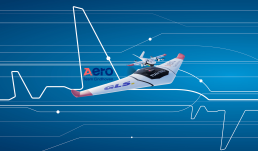
PCB Connect BV has been sponsoring the innovative Eindhoven University of Technology (TU/e) student team, Aero Team Eindhoven to develop autonomous drones for sustainable transport by zero-emission in air delivery. The partnership has supported the mission to revolutionize long-range package delivery by drones with a new solution for in-air battery swaps. This year, Aero Team Eindhoven built the cargo drone, Aegle! Here is what the team had to say about this remarkable project…
"Aegle stands out for its impressive engineering and design. One notable feature is its 3D-printed construction, which offers unparalleled customization and modularity. The use of additive manufacturing has enabled our engineering team to push the boundaries of what is achievable in drone technology. The modular design of Aegle is another highlight, allowing for easy component replacements and upgrades. Modularity ensures adaptability to a wide range of mission requirements, making Aegle a versatile and practical choice."
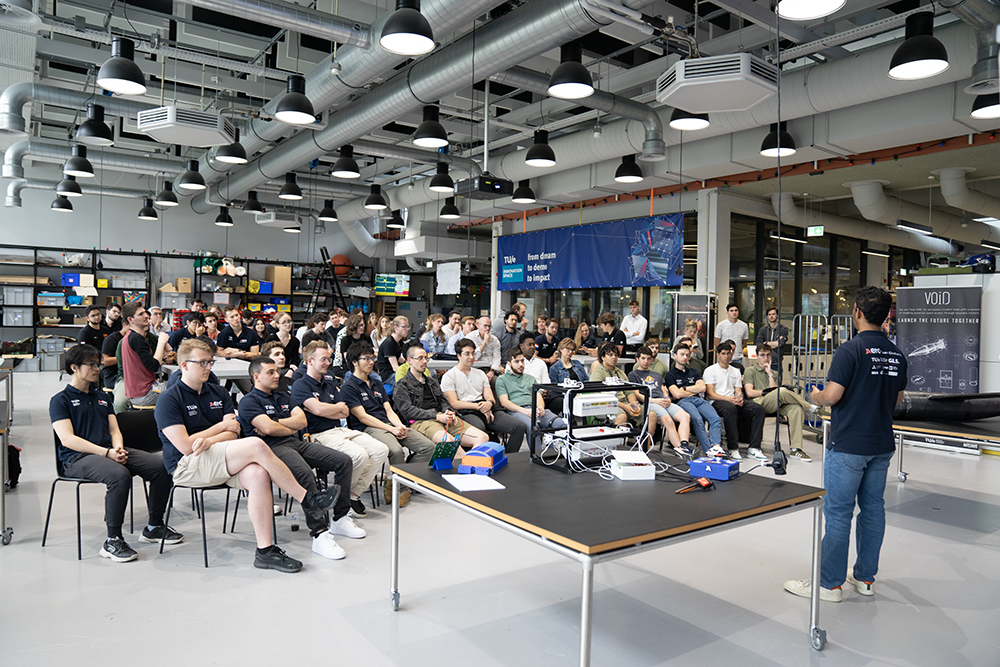
"When it comes to flight capabilities, Aegle utilizes five motors in a quad-plane configuration, each capable of generating up to 8kg of thrust. This configuration enables stable quadcopter flight, providing reliability and control in various scenarios. Powering Aegle is a 10000mAh 12S (44.4V) battery pack, offering a hover flight time of 18 minutes or up to an hour of continuous forward flight. This battery capacity provides ample time for capturing aerial footage or completing missions without interruptions."
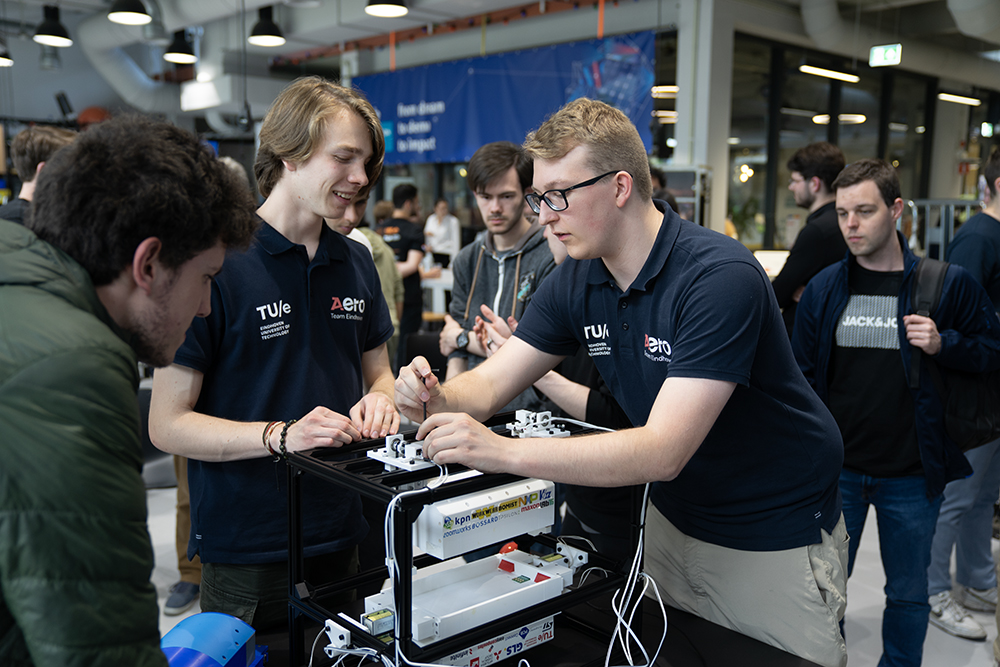
"In terms of production efficiency, the entire assembly of Aegle can be 3D printed within a week. This rapid manufacturing process allows us to streamline production and manufacture drones in a timely manner. Aegle's design also prioritizes ease of repair, with a modular and rapidly repairable structure. This feature ensures that maintenance and repairs can be carried out quickly, minimizing downtime and maximizing operational efficiency. To ensure a robust and lightweight frame, the drone incorporates carbon fiber and acrylic supports. This combination of materials provides both strength and rigidity, while the flexible wings enhance maneuverability during flight. Aegle represents our commitment to pushing the boundaries of drone technology through innovation, practicality, and reliable performance."
The next year will see further development with the knowledge the team has gathered while creating Aegle. This will be the foundation, to start designing and building Spearow, the battery-swap drone. PCB Connect BV are excited to see and support the ambitious team grow and create solutions for aerial transportation.
Find out more here: https://aeroteameindhoven.nl/
Did you know PCB Connect releases a yearly Sustainability Report?
The report contains details on how sustainability is part of the business, approach and sustainable project development. You will also find information on our audit results, follow-up, CO2 emissions, EU green deal and much more...
Guangzhou, China - News Update
Our suppliers in and near Guangzhou were not impacted by the tornado that struck the city over the weekend. The latest bout of extreme weather to hit the country’s industrial district will not interrupt customers' PCB supply chain.
What lies ahead in the Printed Circuit Board (PCB) Market?
We are truly into 2024, so let’s delve into the fascinating world of the Printed Circuit Board (PCB) market and explore what lies ahead in 2024.
The PCB market plays a pivotal role in modern electronics. These circuit boards are the backbone of electronic devices, enabling efficient interconnection of components. PCBs come in various types:
- Single-sided: Basic boards with components on one side.
- Double-sided: Two-sided traces with a top and bottom layer on both sides. Components can be mounted on both sides.
- Multi-layer: Complex boards with multiple layers for intricate circuits.
- HDI (High-Density Interconnect): Compact boards for high-performance applications.
- Ultra HDI: Dramatic size and weight reduction over current HDI.
Key end-user industries include:
- Industrial Electronics
- Healthcare
- Aerospace and Defence
- IT and Telecom
- Automotive
- Consumer Electronics.
What are the current trends and developments?
There has been exciting growth in technology as well as uncertainties. Various factors have contributed to PCB production – let’s take a deeper look.
Technological advancements such as 5G, the Internet of Things (IoT), the Internet of Vehicles (IoV), and artificial intelligence are driving innovation. Smaller, lighter devices with high processing capacities are becoming wearable due to component miniaturisation.
5G Integration
5G networks have revolutionised communication speed. With speeds of up to 20 Gbps, 5G surpasses its predecessor, 4G, and fixed-line internet. Mixed-signal PCBs are essential for 5G due to the high-frequency transmissions involved. These PCBs enable low latency and extended connectivity reach, driving innovations in various industries. Compact and densely populated circuit boards that can handle high-speed signals without interference is a major trend in the PCB for 5G market.
Internet of Things (IoT)
The IoT has extended throughout sectors like healthcare, industrial automation, and wearables. PCBs for IoT devices must adhere to specific rules and requirements. Wireless monitoring and control of home and workplace networks are now possible, enhancing convenience. Techniques like surface mount technology (SMT) enable component placement in close proximity, allowing IoT devices to be small yet functional.
Internet of Vehicles (IoV)
The IoV has allowed vehicles to exchange information, and become more efficient and safer with others, as well as with infrastructures using Vehicular Ad Hoc Networks (VANETs), which originated from Mobile Ad-hoc Network (MANET). The advancement of network gathering of different entities, such as vehicles, pedestrians, roads, parking lots and city infrastructure has provided real-time communication. Being a relatively young technology, the focus on providing a solution to road safety will continue to be a priority.
Artificial Intelligence (AI) and Machine Learning (ML)
AI and ML have found their way into PCB assembly and manufacturing. AI addresses PCB quality concerns, improving product integrity without heavy human intervention. Automation, combined with AI, ensures precision and reliability. Increased deployment of AI technologies across numerous industries, including healthcare, finance, automotive, and manufacturing, will drive the growth of the AI Server PCB market.
The market dynamics, until the end of 2023, there was a decline in consumer electronics sales due to inflation and macroeconomic uncertainties. Demand for smartphones, cameras, PCs, and tablets experienced flat growth in 2023, impacting PCB orders. However, the demand is expected to gain traction in 2024.
What is the PCB market growth forecast for 2024?
The PCB market size is estimated at USD 76.12 billion in 2024. It is projected to reach USD 93.87 billion by 2029, growing at a compound annual growth rate (CAGR) of 4.28% during the forecast period (2024-2029). The factors contributing to this growth:
- Increased adoption of electronic devices
- Technological advancements
- Global connectivity demands.
Industry Improvements in 2024
After a decline in 2023 due to supply and demand imbalances during the COVID-19 pandemic, the global PCB manufacturing industry is poised for revival. The PCB market continues to evolve, driven by innovation, demand for connectivity, and advancements in electronic devices. As technology leaps forward, PCBs will continue to be the backbone of our interconnected world. Let’s embrace the exciting possibilities that lie ahead!
Have you seen the latest PCB Connect CMRT Report?
We have updated our CMRT Report - Gathering supplier data on conflict minerals. PCB Connect has performed its due diligence activities internally and in our supply chain to comply with the law. This report is updated monthly to ensure that no smelter is related to any of the violations determined by the rule. View the latest report here. Under the Conflict Minerals – 3TG and the Extended Minerals Reporting tab.
Did you know PCB Connect releases a monthly Commodity Report?
The Commodity Report provides a detailed analysis of the current PCB sector, which will be valuable information for your business and an insightful summary of the industry.
Sign up to receive your monthly copy now