

China Covid-19 Restrictions Update!
With confirmation that most lockdown restrictions imposed on Shenzhen on March 13th have been lifted as of March 21st. We can confirm that the PCB Connect Group’s core supply chain has resumed total production.
Whilst manufacturing returns to normality, logistics routes out of Shenzhen’s three main container ports and air freight lanes out of Shenzhen and Hong Kong remain heavily congested. Our local logistics team continues to work with our freight partners to minimise any disruption.
Our onsite factory management teams returned to work on March 21st, and we continue to observe all relevant local guidance regarding nucleic testing protocols.
For more information on the current situation, please get in touch with your local PCB Connect Group office for more information.


New Covid-19 Restrictions Placed on China
As an organization, we continue to actively monitor all aspects of our upstream and downstream supply chains in light of the ongoing war in Ukraine and the escalation of the Covid-19 outbreak in Shenzhen.
The latest outbreak of Covid-19 culminated in the suspension of public transport and the movement of people over the weekend of the 12th March, with the majority 17 million-strong population in one of the Chinese most crucial technology hubs being caught off guard by the sudden announcement which has led to a cessation of some manufacturing.
While there is currently no specific timeline for easing these restrictions, PCB Connect Group has been reviewing the situation over the weekend of 12th March; we can confirm that production is continuing in the majority of the PCB Connect group approved factories. Most of our factories are positioned across China, away from Shenzhen, and are not affected. Our factories located in Shenzhen are looking for opportunities in line with guidance notified by the health department of Shenzhen.
While it is anticipated that the PCB Connect Group factory management team will be unable to travel to the manufacturing sites, we continue to monitor and progress our WIP through daily video calls with the factories and utilizing direct video feeds to monitor product build-up in key bottleneck areas.
We remain in close dialogue with our logistics partners in identifying the likely impact of the lockdown on the movement of goods in and out of Shenzhen and Hong Kong once manufacturing resumes. It is anticipated that the delays in moving products out of Shenzhen will become the primary concern over the next few days, and we will outline further news once it becomes available.
Contact Us for further enquiries:

Embedding cooperative thought in your new PCB design materials selection
Embedding cooperative thought in your new PCB design materials selection may provide more significant benefits than you may think!
Because collaboration is a good thing.
It increases knowledge exponentially, reduces time to market, and ensures organizations access the latest thinking, building resilience and maximizing profit.
As it was known during the early 1970s, collaboration or participatory design originated in Scandinavia?
Its roots stemmed from the work of The Norwegian Iron and Metal Workers Union. Which created a project aimed at improving cooperation between management and union as a means of improving worker conditions, and streamlining decision making!
In true Scandinavian style, at the PCB Connect Group, collaboration is at the heart of everything we do. Working with our customers during the materials selection phase of a PCB design is one example of where cooperation can drive cost right from the earliest stage.
The correct specification of material, when considering high frequency, HDI, and products requiring multiple lamination cycles, is essential. An incorrect decision at the concept stage can lead to a lifecycle of poor yield, increased costs, and potentially becoming trapped in a less than optimal supply chain.
So how can collaboration help?
Play the long game.
When considering your new prototype, your domestic fabricator may prefer to use a premium material set ideal for low volume prototyping but may not be cost-effective in volume production due to availability.
Collaborating with potential volume producers at the outset ensures that they can check the lifecycle of the proposed material, the short to mid-term availability, and ensure that possible factories are certified to manufacture and release your PCB correctly.
If you specify a brand of material that is not readily available in your primary manufacturing location, you immediately lock yourself into longer lead times, higher costs through MOV's and potential certification issues.
What steps do I need to take before determining the most appropriate material for my application?
Temperature matters!
When considering suitable material systems, the TG of the material is essential. The TG or glass transition temperature indicates when the material becomes unstable, effectively moving from a solid-state to a semi-solid state. It is necessary at this stage that you consider not only the operating temperature of the PCB in its final native state but also the type of components to be placed on the PCB and the required temperatures the board will be subject to during the assembly process.
TG values for standard PCB materials increment from TG130, TG150 to TG170 degrees celsius, with each TG type having a higher cost attribute dependant on the value of the material specified.
Comparative Tracking Index (CTI) What is it?
CTI, or the comparative tracking index, measures the electrical breakdown properties of an insulator (PCB substrate), determining how close a pair of conductors or tracks can be positioned without the risk of energy leaking from one conductor to another when power is applied to the substrate.
The higher the CTI rating of the material, the more energy the PCB will withstand before energy leakage starts to occur, ultimately leading to short circuits between the pair tracks.
| Tracking Index (V) | PLC |
| 600 and greater | 0 |
| 400 through 599 | 1 |
| 250 through 399 | 2 |
| 175 through 249 | 3 |
| 100 through 174 | 4 |
| <100 | 5 |
Having considered the thermal regime that the PCB could be subject to over its lifetime, we turn our attention to the electrical properties of the laminate and, specifically, what is known as the Dk value or dielectric constant.
The Dk value of PCB laminates is essential when considering high-speed designs and especially products with impedance requirements. The dielectric constant measures the energy between a pair of tracks within the laminate compared to that pair of tracks if they were contained within a vacuum.
The Dk value for a vacuum is 1.0, with all other materials having a .higherDk value. A laminate with higher Dk value stores more energy than a laminate with a lower Dk value. At higher Dk values, energy flows slower through the tracks, making higher Dk laminates less suitable for higher speed applications.
So I have a new PCB design; what should my significant considerations be?
Ensure that you have selected an appropriate laminate system that meets the operating temperature requirements of your product in its final native form and understand the temperatures that your assembly facility operates at in assembling the product correctly.
Check that you have correctly modelled any impedance characteristics of the PCB relative to the Dk value of the material you are considering.
From a production standpoint, the primary consideration is to ensure that the fabricator you want to use has the correct underwriter laboratories approval to certify and use the PCB laminate you have under consideration. Manufacturing a production batch and finding that your factory cannot support UL approval can be a very costly exercise.
Check the lifecycle of the material either with your likely fabricator or directly with the material producer. Suppose your application has a requirement to provide ongoing products over an extended time frame; ensuring continuity of supply directly from the material producer may save you time and money if the laminate system becomes obsolete mid-way through a project.
Check that your fabricator has the correct UL approvals to certify and release the product in each territory that you expect to sell and distribute.
Understanding the critical aspects of a material's thermal and mechanical properties and collaborating with your PCB fabricator will ensure the lowest total cost for your new design and ensure that your PCB has multiple sourcing options at any point in its lifecycle.
For more information on materials selection and how the PCB Connect Group can support your materials decision-making process, why not contact us for more details.

PCB Connect BV moves to High Tech Campus
We're moving offices!
PCB Connect BV is glad to announce that we partnering with one of EU's most innovative campuses: High Tech Campus Eindhoven.
We move on January 17 2022.
PCB Connect BV has been experiencing strong growth in recent years, and the move is an excellent opportunity for us to expand. We will be a part of a phenomenal knowledge network that our customers will most certainly benefit from.

“It is a well-considered choice to become part of the HTC innovative ecosystem. An inspiring environment among dynamic start-ups and prominent multinationals. The campus has been at the historical heart of electronics development in the Netherlands and is described as an excellent workplace for our crew: open and transparent, high-tech and centered in nature. It aims to be one of the most Sustainable Campuses in Europe”.

'We welcome PCB Connect to our Campus. Being a global supplier of complex printed circuit boards and adding expert knowledge of global electronics manufacturing base and environmental aspects, PCB Connect strengthens our high-tech ecosystem and introduces synergy with the companies on campus.'
We look forward to this new chapter in the PCB Connect development story.
contact us:

Will the Tiger Roar in 2022
Throughout history, the Ox has been a symbol of reliability. It is tenacious to the task at hand and assured in its progress as it moves calmly towards its goals.
It is fair to say that 2021 the year of Ox, has been anything but calm.
A bubbling pandemic, an explosion in global demand, shortages of materials and finished goods were unseen since the early 80s. As we look forward to the holiday season, what does 2022, the year of the Tiger, promise for the PCB industry? And will the market move in a more calculated tiger-like fashion?
At PCB Connect, we look back, reflect on another unprecedented year. Asking what challenges await in the year of the Tiger.
Is the Tiger's roar the loudest in the jungle?
By any measure, anticipated GDP growth of 8% for 2021 would signify success for most modern-day economies. Still, for the world's second-largest economy. 2021 may be the year when China focuses on the extraordinary highs in Q1 and its 18.3% leap in GDP. To the more sobering prospect of trying to limit inflationary pressure on the cost of goods sold on exports.
Whilst dealing with a real-world climate crisis and growing domestic debt. With export growth up 27% year on year in October 2021 beating analyst forecasts. What does the prospect of a stifled domestic economy mean for PCB export prices? With a domestic cooling market, we expect export sales to regain some of the power it ceded to domestic production in 2020.
Predominantly due to the first in, first out post-pandemic domestic growth. Whilst a weaker domestic market would typically increase competition for export orders providing a more competitive landscape for importers. It is unlikely that the start of 2022 will bring the price relief that many are hoping for.
So what have China's policymakers got to do with it?
With producer prices increasing by over 10% in September. China's policymakers face a dilemma on limiting inflation, reinvigorating the domestic economy, and maintaining its new self-image as a responsible global climate citizen.
Does this have anything to do with the so-called China energy crisis?
Higher input prices in China's factory system can be partly attributed to soaring coal and energy prices as supply struggles to meet demand. With pressure to cut the use of coal, the resulting rationing of power has left many factories facing the prospect of reduced capacity and output. The question for China's policymakers as we enter 2022 is how to reinvigorate its domestic economy without the tool of massive internal infrastructure investment. Which has historically contributed in part to the global climate crisis. As we move deeper into the winter months. The electricity demand will continue to grow, and the disconnect between supply and demand is anticipated to deepen. Global news coverage around the crisis has started to slow. Still, the issues remain current, and vigilance around supply chain capacity and output levels will be critical barometers of factory performance as we head deeper toward winter.
Rapidly increasing freight rates lead to surging profits for shipping companies and higher import pricing for consumers.
The UN reports that rising freight rates are likely to push up global import prices by as much as 11%. Many shipping lines are reporting historic high-profit levels, with one notable global freight company having increased profits tenfold yearly. Conditions for consumers will likely remain challenging for some time to come. However, the global freight crisis is not solely about capacity availability. With staff turnover and wage inflation becoming an emerging issue. According to Hing Chao, executive chairman of Wah Kwong, a shipping line in Hong Kong, the risk of travelling to and from destinations at the front line of the pandemic is having a real impact on the mental health of seafarers. Which is making it increasingly difficult to crew many cargo ships, which has a knock-on impact on crew wage costs.
With as many as 600 shipping containers ships are currently stuck awaiting to dock in ports globally at the start of November. It is anticipated that global sea freight congestion would last until at least the beginning of February.
The so-called global supply chain crunch stretching from Asian producers & reaching consumers globally continues to be felt on airfreight markets. With reductions in airfreight capacity struggling to contend with global demand. As recovering economies and increases in global vaccination levels drive economic expansion.
With airfreight traditionally operating as a release valve for periods of peak loading, allowing importers to manage their freight need. It is clear that the impact of the pandemic will continue to be felt on freight and logistics for some time to come. As the western world settles down and looks forward to the coming festive season, and as Asia looks eagerly ahead to the year of the Tiger, the global economy continues its recovery but the resilience of global supply chains continues to be a concern. And only time will tell whether the Tiger will roar again in 2022.
contact us today

Chinese New Year
The Chinese New Year Holiday is coming. From January 31 to February 6 2022, our china factories will be closed. The holiday could affect the production of your printed circuit boards. We kindly advise considering that during weeks of (January 24 - January 30) and (February 7 - February 12), our Chinese factories will soften production and thus planning ahead of time is important.
Due to the Chinese government's recent dual control of energy consumption policy. Some factories can be affected by reducing production capacity.
You can prepare yourself to avoid supply chain disruption by placing your orders as early as possible, covering the production volumes for the coming months. The most important is to secure your PCB production.
Together we can plan the best solution for your needs!
Our teams are well prepared to help you put your requests into action and answer any questions you may have.
Do not hesitate to contact your local PCB Connect office for further information about lead time and recommendations for your order planning.
Contact: sales@pcbconnectgroup.com

Power Restriction in China
The universal challenge of containing a pandemic continues to be felt across the industry. For example, China reports that the current upturn in global economic demand led to energy consumption exceeding supply.
When China is pushing to demonstrate its global credentials, placing further control around the mining of fossil fuels, the strain on the existing resource and infrastructure becomes too much. Power limitations have increased over recent days, and total power outages are now frequent.
Whilst the cost to residential areas, particularly those in the colder North East of China, is high, there have also been consequences to industry, and electronic technologies, including those directly related to the further need for green energy technology.
With coal resources dwindling at the time of writing, electricity shortages are prevailing across the majority of mainland China.
These shortages are now impacting all industries. Consequently, economic observers are now considering the Chinese economy will grow by half of one percent less at 7.8% than had previously been forecast.
This energy deficit affects our factory base, extends lead times, and puts further pressure on the global PCB raw materials supply chain, which is already struggling to balance soaring demand.
- Our factory-based teams coordinate across all parts of the manufacturing process to deliver our order confirmations.
- Our factory teams notify of total power outages as practically and as soon as possible after the resumption of power, allowing a quicker understanding of which work orders could be affected and expediting upon resumption of power.
- We have daily meetings with senior factory management to confirm all planned regional government power shedding activity.
- We are putting extra resources to monitor known bottlenecks in production, watching the whole factory WIP, ensuring orders are progressing as smoothly and fast as possible.
- Identifying actors that could affect the likely number and severity of power outages by province we operate in and then using that data to quote new business from our factory based in regions that are likely to be less impacted.
Whilst the most challenging current conditions are in the North East. Suppose the countermeasures that the Chinese Government have put in place do not work in the concise term. In that case, this will likely start to become another significant Global Supply Chain shock with the potential to exceed the issue currently being experienced in many industries due to electronics components shortages.
Our customer teams will update you regularly on current lead times and your order schedules, allowing us to plan a conversation should you be concerned about the extent of your order schedules.

The Future of Logistics
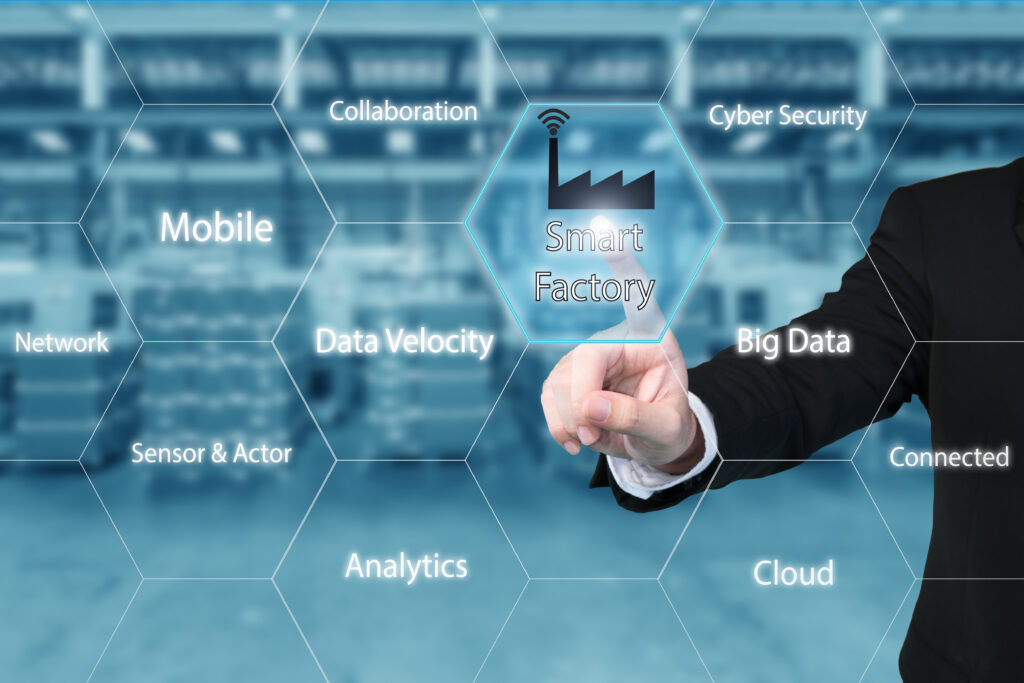
The business world experienced the coronavirus pandemic. And the Logistics sector has been propelled to review its innovations that have been definitive over the 21st century. This pandemic has proved to be a catalyst on how B2B businesses move forward with their logistics. By being inclusive of sustainability and embracing new technology. What does the future of logistics look like for PCB Connect?
- Sustainable approaches
Every challenge comes with its opportunities. The world took a pause due to the pandemic. That had a dramatic impact on our environment. Roads became less congested and air pollution eased. The International Energy Agency estimates, that global greenhouse gas emissions will be around 8% lower this year as a direct result of the virus.
2. Managing risk with flexibility
PCB Connect understands that flexibility is important in ensuring that we are able to deliver quality PCB's to our customers. Being able to manage volatile demand and erratic supply interruptions have been an activity we have had a hands-on approach to, where we have been actively sourcing alternative means to supply our customers with their ordered PCBs
3. Future-Proofing Supply chain by utilising people and technology
Digital approaches are becoming an integral part of the supply chain and logistics processes. Our goal as an organisation is to be agile, adaptable and continue to learn as supply and demand conditions change. The world finds itself between a transformational phase. The future of logistics is top of the trend radar. PCB connect is excited to be a part of the evolution of logistics. We look forward to better servicing our customers.
Source: https://bit.ly/39GxbD2